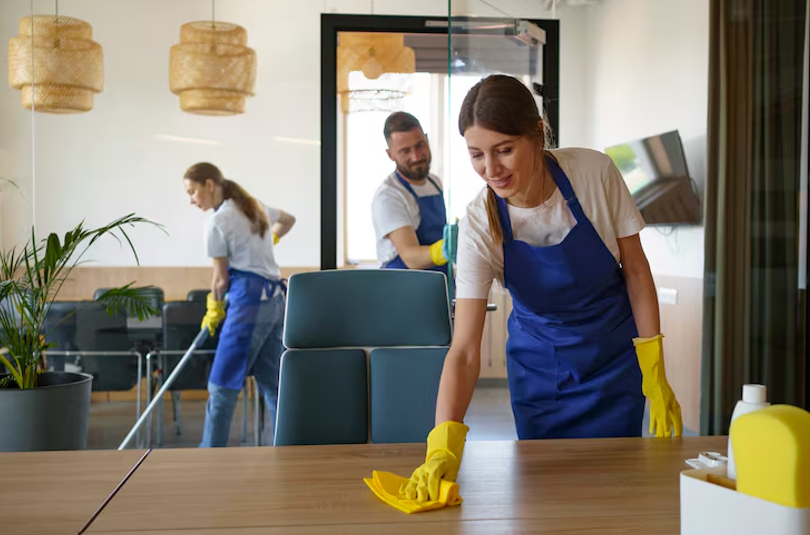
Contract Cleaning Services: Health, Safety and Compliance Guide
Maintaining a workplace is more than just a facade. It is concerned with the protection of people. Employees expect to enter an office and have a safe and hygienic environment. That is the duty of employers who must comply with legal requirements regarding the cleanliness of the workplace.
Contract cleaning services assist companies in complying with the UK health and safety requirements. But what is that in day-to-day terms? And what is to be checked before selecting a provider?
Let’s break it down
The importance of Health and Safety in Commercial Cleaning:
Hygiene at the workplace is not a choice. Health and Safety at Work Act 1974 obliges employers to maintain safe work environments. This involves the cleaning of premises and elimination of hazards that may cause injuries to staff or visitors.
Unclean areas may lead to slips, as well as trips and falls. They can spread infections. They may trigger allergies or lead to breathing difficulties. These are serious risks. They may cause employee sickness, litigation and reputation loss to your business.
What is more problematic is that most employers are not fully aware of what the law entails. Others feel that it will suffice to have someone to mop the floors. This is not the way compliance works.
A contract cleaner is not supposed to make things look clean. They should adhere to health and safety procedures that are in line with the UK standards.
What Compliance Means to Contract Cleaning
In this case, compliance refers to adherence to regulations by the Health and Safety Executive. It refers to the application of the correct procedures as well as the correct products and equipment to ensure that workplaces are safe.
Here’s what that includes:
- Risk Assessments
Risk assessment should be done before cleaning begins. This determines the risks that could be harmful. Is the floor slippery? Are there chemicals in use? Do you have busy places that require cleaning regularly? A reputable contract cleaner will vary his work depending on the findings.
- COSHH Regulations
The Control of Substances Hazardous to Health (COSHHH) regulations deal with the handling and storage of chemicals. There are cleaning products that may lead to skin complications or breathing difficulties when misused. These rules should be known to your cleaning provider and be trained to adhere to them.
- Trained Staff
Cleaning does not involve wiping desks. Training on health and safety, handling of equipment and infection control should be provided to the employees. Ask if training is ongoing. Ask cleaners about their knowledge of cleaning door handles, and light switches and other common places.
- Equipment Standards
The tools should be well maintained. Bad equipment may cause dirt rather than eliminate it. Dust and allergens should be captured by vacuum cleaners. The mops and cloths are to be washed or changed frequently to prevent the growth of bacteria.
Legal Responsibilities You Can Not Overlook:
You cannot leave all the responsibility to a cleaning company in case you have a business or a building. You remain liable under UK law.
The Workplace (Health, Safety and Welfare) Regulations of 1992 give an explanation of what ought to be done to make work places clean. Floors and work surfaces ought to be cleaned. Waste must be removed often. Toilets and sinks must be clean and in a good condition.
The Health and Safety Executive can take action against failure to adhere to these rules. That may involve warnings, fines or legal punishment.
You are still in charge even when you outsource cleaning. This is the reason why one should select a service provider that is aware of how to comply with the law.
See also: How AI Is Changing the Face of Financial Services
What to consider in a Contract Cleaning Service:
Not all cleaning companies are equal. Other companies are more careful with compliance and training. Check the following before you sign a contract:
- Insurance and Certifications:
Ensure that the company is insured against public liability. Belonging to a trade body is also a positive indicator. These measures demonstrate that the provider is serious about their responsibilities.
- Clear Service Agreements:
Everything should be written in the contract. What will be the frequency of cleaning? What areas will be covered? What products will be used? Do not assume anything. Ask questions and receive definite answers.
- Flexibility and Communication:
Your requirements may vary throughout the year. Cleaning may have to be done more often during the flu season. When you increase the size of your office, cleaning schedules must also vary. An effective provider will remain receptive and maintain open and easy communication.
Examples of Typical Health and Safety Hazards in Business Areas
All workplaces are unique. However, there are certain health and safety hazards that are nearly everywhere. A good cleaning service will be centred on the following:
- High-Touch Surfaces:
Objects such as door handles, keyboards and phones may harbour germs. These should be well cleaned, particularly in common places.
- Toilets and Washrooms:
These areas are highly risky in terms of bacteria. It normally requires cleaning on a daily basis. Hand dryers and soap should be replenished and inspected.
- Kitchens and Break Rooms:
Fridges, as well as counters and microwaves, may get unhygienic when uncontrolled. Food spills must be washed immediately to prevent pests.
- Floors and Walkways:
Injuries in the workplace are common due to wet floors. Cleaning must be done at the less busy times. When floors are slippery, people should be warned using signs.
Infection Control and Hygiene Standards
Most workplaces have made the task of controlling the infection the priority of the pandemic, and cleaning teams have to monitor the actions to avoid the spread of germs.
This involves the use of anti-virus and anti-bacterial disinfectants. It is cleaning in a manner that does not transfer germs but removes them.
There are more demanding places of work, such as healthcare or food production facilities. When you happen to be in such industries, ensure that your cleaning service provider is knowledgeable of what is required.
Documentation and Record Keeping:
It is not simply about doing what is right. You are also expected to prove that it was done. That is why documentation is significant.
Cleaning providers should keep records. That is the cleaning, risk assessment and health and safety accidents schedule.
In case you are inspected at the workplace, you will be required to prove that you did the right things.
Ask about the company tracking system. Do they have cleaning checklists? Do they submit reports? Do you access such information as and when you need it?
Final Thoughts
The tidiness at the workplace is greater than most people think. A clean office ensures that your employees are safe, minimises risk and ensures that your business does not break the law.
One should choose a cleaning service that values this. Identify suppliers with good communication skills, educate their workers and follow the rules that govern your business.
Cleanliness might be a trivial issue. Small details are, however, the most important in health and safety.